Best Eye Hospital In Lucknow | D.k Eyecare Hospital

Screen Time and Kids' Eyes: Smart Tips to Protect Their Vision
Screen Time and Kids' Eyes: Smart Tips to Protect Their Vision
Your child just finished online classes, then picked up a tablet for YouTube, and now wants to play a video game before bed. Sound familiar?
If you nodded, you are not alone. And your concern is completely valid.
Children today are growing up in a world dominated by glowing screens — smartphones, tablets, laptops, and televisions. While technology opens up a world of learning and entertainment, it comes with a serious hidden cost: deteriorating eyesight in children.
If you’ve recently visited an eye hospital in Lucknow, you may have already heard from doctors that the number of children being diagnosed with digital eye strain and early-onset myopia has gone up significantly in the last few years.
This blog breaks down exactly what’s happening to your child’s eyes, why screens are so harmful, and most importantly — what you can do about it right now.
Why Are Children's Eyes More Vulnerable Than Adults'?
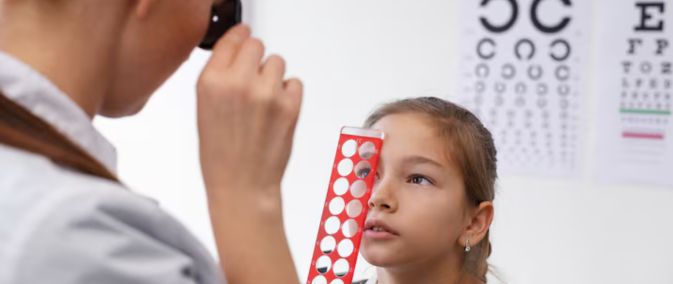
Children’s eyes are still developing. Unlike adults, whose eye structures are fully formed, kids have larger pupils and clearer lenses — which means they absorb significantly more light, including harmful blue light, than adults do.
There are a few key biological reasons why children are at greater risk:
- Their eyes have a higher concentration of lens proteins that are more sensitive to radiation from screens.
- Children rarely blink at the normal rate when looking at screens, leading to faster dryness and irritation.
- Kids are less likely to notice or report early discomfort, which means damage builds silently over time.
- Their visual system is still developing until their mid-teens, making it highly susceptible to structural changes.
This is not just about tired eyes. Prolonged screen exposure during childhood can alter the physical development of the eye — potentially causing permanent changes in vision.
How Much Screen Time Is Too Much? (Age-Wise Guide)
The American Academy of Pediatrics and most eye health experts globally recommend the following:
Age Group | Recommended Screen Time |
Under 18 months | No screen time (except video calls) |
18–24 months | Very limited; only with parent supervision |
2–5 years | Maximum 1 hour per day |
6–12 years | Maximum 2 hours of recreational screen time |
13–17 years | Encourage healthy limits; monitor usage |
Note: Online schooling is often unavoidable. The focus should be on managing total screen time and incorporating healthy eye habits throughout the day.
What Does Excessive Screen Time Actually Do to Kids' Eyes?
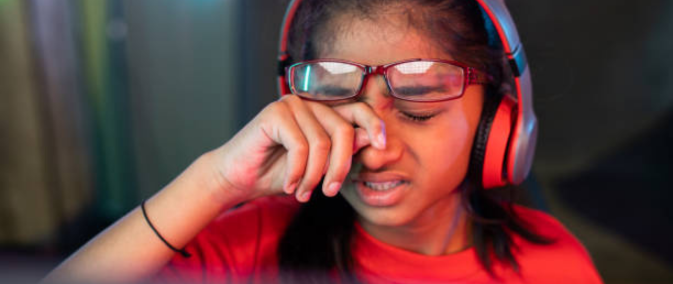
Here is what science and eye specialists consistently observe in children with high screen exposure:
1. Digital Eye Strain (Computer Vision Syndrome)
This is the most immediate and common effect. Symptoms include:
- Eye redness and irritation
- Frequent headaches, especially around the forehead and temples
- Blurred vision after screen use
- Difficulty focusing when switching between near and far objects
- Burning or stinging sensation in the eyes
2. Myopia (Nearsightedness)
One of the most alarming trends in pediatric ophthalmology worldwide is the rapid rise in childhood myopia. Studies show that children who spend more time indoors on screens and less time outdoors are significantly more likely to develop myopia.
When the eye focuses continuously on close-up screens, it may start to elongate physically — making it harder to see distant objects clearly. Once myopia sets in, it tends to progress throughout childhood.
3. Reduced Blink Rate and Dry Eyes
Normally, we blink about 15–20 times per minute. When staring at a screen, this drops to as few as 5 times per minute. Less blinking means the tear film on the eye’s surface evaporates faster, leading to dry, itchy, and irritated eyes.
4. Disrupted Sleep and Indirect Vision Impact
Blue light from screens suppresses melatonin — the hormone that signals your body it’s time to sleep. Poor sleep in children directly affects eye health, cognitive development, and concentration. Kids who use screens before bedtime consistently show higher rates of fatigue-related vision problems.
5. Convergence Insufficiency
This is the difficulty the eyes have in working together when focusing on nearby objects for extended periods. Children with undiagnosed convergence insufficiency often struggle in school — they may complain that words “jump” or “blur” on the page after reading for a while.
Warning Signs Parents Should Never Ignore
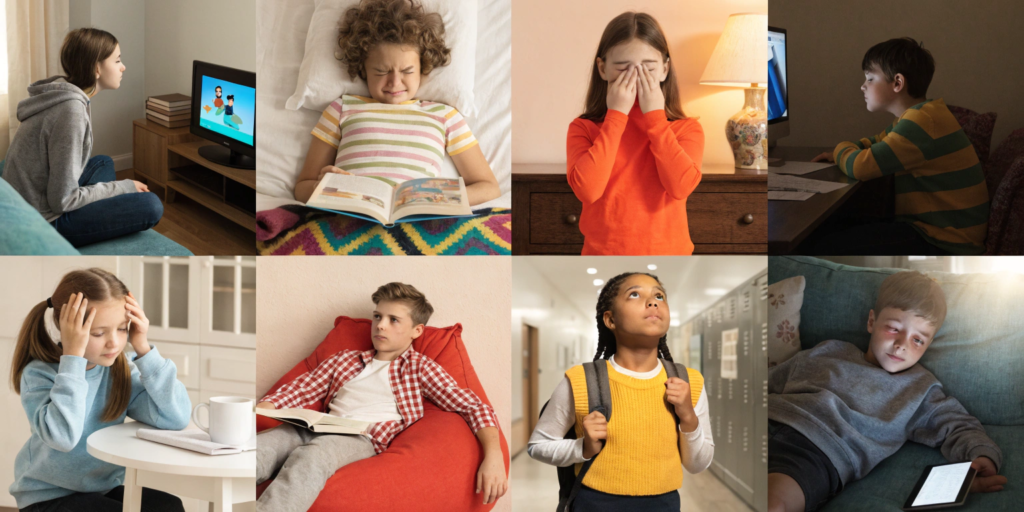
Your child may not always know how to describe what they’re experiencing. Watch out for these behavioral and physical signs:
- Sitting unusually close to the TV or screen
- Squinting frequently while reading or watching
- Rubbing eyes often, especially in the evening
- Tilting the head to one side while looking at a screen or book
- Complaints of frequent headaches
- Avoiding reading or near-work tasks
- Loss of interest in school due to difficulty seeing the board
- Eyes appearing red, watery, or swollen after screen use
If you notice three or more of these signs consistently, it’s time to consult a specialist without delay.
10 Smart, Doctor-Approved Tips to Protect Your Child's Eyes
1. Follow the 20-20-20 Rule — Every Single Time
Every 20 minutes of screen time, your child should look at something 20 feet away for at least 20 seconds. This simple habit relaxes the eye muscles that strain during prolonged near-focus.
Make it fun: Set a cheerful alarm tone every 20 minutes and make it a “look outside” game.
2. Prioritize Outdoor Time Daily
Research consistently shows that spending at least 1–2 hours outdoors per day reduces the risk of myopia progression in children. Natural light plays a key role in regulating healthy eye development.
Outdoor activities — cycling, playing in the park, even just a walk — all count.
3. Set Up an Eye-Friendly Screen Environment
How your child uses a screen matters as much as how long they use it. Set up their workspace properly:
- Screen should be at least arm’s length (about 18–24 inches) from the face
- The top of the screen should be at or slightly below eye level
- Room lighting should match screen brightness — no screens in the dark
- Reduce screen glare using anti-glare filters or positioning away from windows
4. Limit Recreational Screen Time Firmly
Be clear about the difference between educational screen time (online classes, reading) and recreational screen time (YouTube, gaming, social media). Set limits for the latter and stick to them consistently.
5. Encourage Conscious Blinking
Teach older children to blink consciously and regularly while using screens. For younger children, a parent can gently remind them every few minutes. Better blinking = better tear distribution = less dryness.
6. Use Devices in Night Mode or Low Blue Light Mode
Most smartphones and tablets have a “Night Mode” or “Warm Display” setting. Enable this especially during evening hours to reduce blue light exposure before bedtime. Some families invest in blue-light-filtering glasses for their children — worth discussing with your eye doctor.
7. No Screens at Least One Hour Before Bedtime
Make the bedroom a screen-free zone after a fixed evening time. Replace screen time with reading a physical book, storytelling, or light play. This not only protects vision but improves sleep quality significantly.
8. Ensure a Nutrient-Rich Diet for Eye Health
What children eat directly impacts their eye health. Include these in their daily diet:
- Vitamin A: Carrots, sweet potatoes, spinach
- Omega-3 fatty acids: Fish, walnuts, flaxseeds
- Lutein & Zeaxanthin: Eggs, leafy greens, corn
- Vitamin C & E: Citrus fruits, almonds, sunflower seeds
Good nutrition supports the development of the retina and can slow myopia progression.
9. Schedule Regular Eye Check-Ups
Many eye problems in children are entirely asymptomatic in the early stages. A professional eye exam can detect issues that neither you nor your child may be aware of.
Recommended eye check schedule for children:
- First exam at 6 months
- Second exam at 3 years
- Before starting school (around age 5–6)
- Every 1–2 years thereafter, or as recommended by your doctor
10. Model Healthy Screen Habits Yourself
Children mirror adult behavior. If they see parents glued to phones at dinner or before bed, no amount of instruction will help. Set boundaries as a family — phone-free meal times, outdoor weekends, and visible screen breaks send a powerful message.
When Should You See a Pediatric Ophthalmologist?
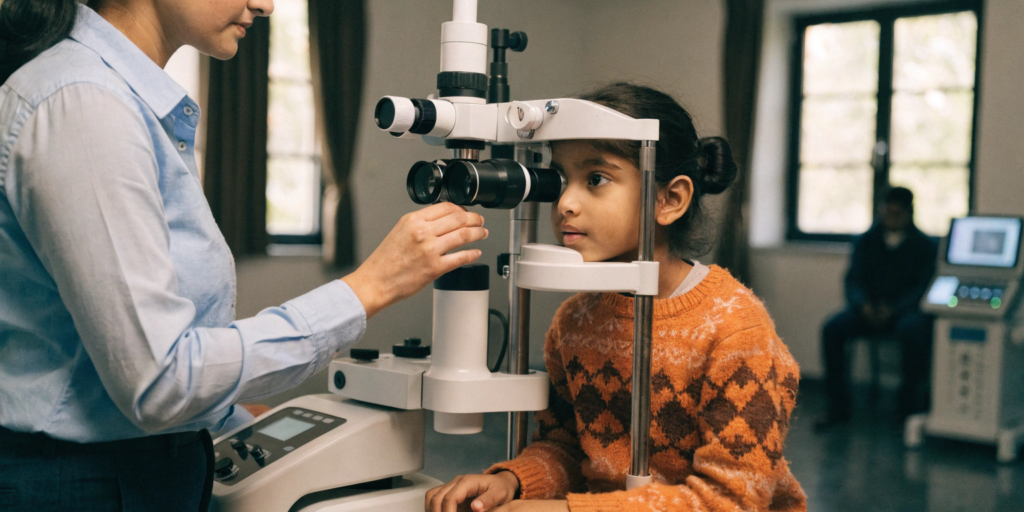
- Your child’s teacher has flagged difficulty reading the board
- You’ve noticed one eye drifting or turning
- Your child has been wearing glasses and the prescription keeps changing rapidly
- Symptoms persist despite following healthy screen habits
- Your child is under 6 and showing any signs of visual difficulty
D.K Eyecare: Trusted Pediatric Eye Care in Lucknow
When it comes to your child’s eyes, you want a team that combines clinical expertise with genuine care for young patients.D.K Eyecare has been one of Lucknow’s most trusted names in ophthalmology since 2010. Their dedicated pediatric eye care unit is equipped with advanced diagnostic technology and staffed by experienced specialists who understand the unique needs of children’s developing eyes.From comprehensive vision screenings and myopia management to treatment of strabismus and digital eye strain, D.K Eyecare offers a full spectrum of pediatric eye care services in a child-friendly environment.Parents across Lucknow trust D.K Eyecare for early detection, honest guidance, and treatments that are tailored to each child’s age, lifestyle, and visual needs.Final Thought
Children’s eyes are precious — and they’re under more pressure today than any previous generation has ever experienced.The good news? Most screen-related eye problems are preventable. Small, consistent habits — regular breaks, outdoor time, proper screen setup, and timely eye check-ups — can make a world of difference to your child’s long-term vision health.Don’t wait for the signs to worsen. Protect their sight today, so they can see a clearer tomorrow.👉 Book a pediatric eye consultation at D.K Eyecare, Lucknow — because their little eyes deserve big care.Frequently Asked Questions
For children aged 6 and above, most experts recommend limiting recreational screen time to a maximum of 2 hours per day. Educational screen time for school purposes should be broken into short sessions with regular breaks.
Prolonged, unmanaged screen use can contribute to myopia development, which is a structural change in the eye. While digital eye strain itself is usually reversible with rest, myopia that develops due to excessive near-work can be permanent and may progress over time.
Yes, excessive screen time can accelerate myopia progression in children who are already nearsighted. It’s especially important for children with existing prescriptions to follow the 20-20-20 rule, spend time outdoors, and attend regular follow-up appointments.
Blue-light glasses can help reduce glare and may improve comfort during screen use, especially in the evenings. However, they are not a substitute for limiting screen time. Always consult a pediatric eye specialist before purchasing specialized eyewear for your child.
The first eye exam is recommended at around 6 months of age, followed by an exam at 3 years and again before starting school. After that, children should have their eyes checked every 1–2 years, even if no problems are apparent. Early detection is the most powerful tool in protecting lifelong vision.
👉 Want to know more? Check out our latest blogs:
Get In Touch

Dr. Deepak Lakhmani, MBBS, MS (Ophthalmology)
Dr. Deepak Lakhmani is a highly skilled and experienced ophthalmologist based in Lucknow, India. He is the founder and director of D.K. EyeCare Hospital. He specializes in cataract surgery, glaucoma management, retina care, and advanced refractive procedures. With a strong focus on accurate diagnosis and modern surgical techniques, he is committed to delivering personalized, safe, and effective eye care to every patient.