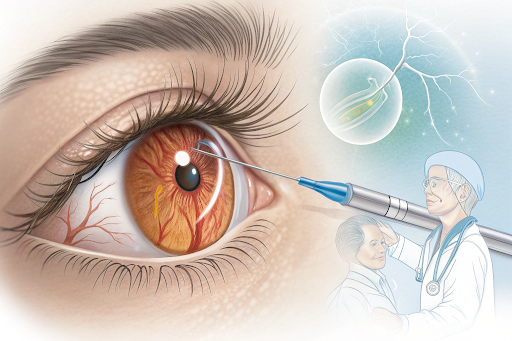
The Retina and Its Importance
The retina is a thin, light-sensitive layer at the back of the eye that plays a crucial role in vision. Any retinal damage can lead to vision loss, and in severe cases, even permanent blindness. Various retinal disorders can affect the retina, including retinal tears, retinal detachment, and retinopathy.
Causes of Retinal Damage
Several factors contribute to retina damage, such as:
- Aging – Conditions like macular degeneration
- Eye injuries or trauma
- Diabetes – Leading to diabetic retinopathy
- High blood pressure – Causing retinal vein occlusion
- Genetic disorders – Such as retinitis pigmentosa
- Eye diseases – Leading to retinal detachment
Common Retinal Disorders
Retinal Tears and Retinal Detachment
A retinal tear occurs when the retina develops small holes or breaks. If untreated, it can lead to retinal detachment, where the retina detaches from the eye wall.
Diabetic Retinopathy
This condition results from diabetes and leads to retinal vein occlusion and damage to retinal tissue. It requires early intervention to preserve vision.
Epiretinal Membranes
These are scar-like tissues that form on the retina, causing vision impairment.
Retinal Vein Occlusion
This occurs when the retinal vein becomes blocked, leading to vision loss.
Diagnosis of Retinal Diseases
A comprehensive eye exam is essential for diagnosing retinal diseases. Ophthalmologists use advanced diagnostic tools to identify irregularities and assess the extent of damage within the retina.
Common Diagnostic Tests
- Amsler Grid Test – Used to detect distortions in central vision, indicating retinal damage such as macular degeneration.
- Optical Coherence Tomography (OCT) – Provides high-resolution images of the retina, helping diagnose macular holes, epiretinal membranes, and macular edema.
- Fundus Autofluorescence (FAF) – Highlights lipofuscin, a pigment that accumulates with retinal damage, assisting in the evaluation of macular degeneration.
- Fluorescein Angiography – Uses a fluorescent dye to map retinal blood vessels, identifying abnormalities like leaking or blocked vessels.
- Indocyanine Green Angiography – Employs infrared light to visualize deeper retinal and choroidal blood vessels.
- Ultrasound Imaging – High-frequency sound waves create images of the retina, particularly useful for detecting tumors and hemorrhages.
- CT and MRI Scans – Occasionally used for assessing eye injuries and tumors.
Treatment Options for Retinal Diseases
The primary goal of retinal disease treatment is to slow progression, preserve vision, and, where possible, restore lost vision. Early diagnosis is crucial, as some damage may be irreversible.
Common Treatment Methods
- Photocoagulation – Seals retinal tears and prevents retinal detachment.
- Scatter Laser Photocoagulation – Shrinks abnormal blood vessels in conditions like diabetic retinopathy.
- Cryopexy (Freezing Therapy) – Freezes retinal tears, creating scar tissue to secure the retina in place.
- Pneumatic Retinopexy – Involves injecting gas into the eye to push a detached retina back into place.
- Scleral Buckling Surgery – Uses a silicone band around the eye to relieve tension and support retinal reattachment.
- Vitrectomy – Removes the vitreous gel from the eye and replaces it with gas or fluid, used for retinal detachment and severe eye trauma.
- Intravitreal Injections – Medications injected directly into the eye to treat wet macular degeneration and diabetic retinopathy.
- Retinal Prosthesis Implantation – In severe cases, an electronic chip can be implanted to partially restore vision.
Coping Strategies for Vision Loss
- Regular Eye Exams – Ensure eyeglass prescriptions are updated.
- Use of Magnifiers and Assistive Devices – Large-print books, electronic magnifiers, and voice-assisted technology can enhance daily activities.
- Home Modifications – Improving lighting, reducing hazards, and using high-contrast labels for better visibility.
- Alternative Transportation – Utilizing public transport, ride-sharing services, or vision-assistance programs.
- Support Groups and Counseling – Emotional and psychological support can help individuals adapt to vision changes.
👁🗨 Lucknow’s #1 Trusted Eye Hospital 🏥✨
Preventative Measures and Lifestyle Adjustments
- Regular Eye Checkups – Early detection prevents further vision loss.
- Protective Eyewear – Reduces risk of eye injuries.
- Healthy Diet – Nutrients like vitamin A, C, E, and omega-3 fatty acids support eye health.
- Managing Underlying Conditions – Controlling diabetes and hypertension reduces the risk of retinal diseases.
- Avoiding Smoking – Smoking increases the likelihood of macular degeneration and other retinal conditions.
When to See an Eye Specialist
- Sudden vision changes such as blurriness, floaters, or flashes.
- Difficulty seeing at night or loss of peripheral vision.
- Any history of eye trauma or chronic conditions like diabetes.
Finding the Right Eye Hospital in Lucknow
For those experiencing retinal issues, seeking treatment at a specialized eye hospital in Lucknow ensures access to experienced ophthalmologists and advanced diagnostic and treatment options. Look for hospitals with:
- Retinal specialists trained in the latest techniques.
- Advanced imaging and surgical equipment.
- A proven track record of successful treatments.
- Comprehensive post-treatment care and vision rehabilitation services.
Symptoms of Retina Damage
- Sudden blurry vision
- Flashes of light
- Decreased vision
- Floaters in vision
- Loss of vision
Retina Damage Treatment Options at Eye Hospital in Lucknow
Laser Treatments
- Laser surgery can seal retinal tears and treat conditions like diabetic retinopathy.
Pneumatic Retinopexy
- Gas bubble injection to push the detached retina back into place.
Cryoretinopexy
- Freeze treatment used to repair retinal breaks and tears in the retina.
Vitrectomy
- Surgical procedure to remove damaged retina tissue and replace the eye layer with clear fluid.
Retinal Detachment Repair
- Surgical treatment is almost always necessary for retinal detachment.
Common Retinal Disorders and Treatments
| Retinal Disorder | Symptoms | Treatment Options |
|---|---|---|
| Retinal Tear | Flashes, floaters | Laser Surgery, Cryoretinopexy |
| Retinal Detachment | Vision loss, shadows | Pneumatic Retinopexy, Vitrectomy |
| Diabetic Retinopathy | Blurred vision | Laser Treatment, Eye Injections |
| Retinal Vein Occlusion | Sudden vision loss | Medication, Laser Surgery |
Preventive Measures for Retinal Damage
- Regular eye checkups for early detection
- Protective eye gear to avoid potential eye trauma
- Managing diabetes to prevent retinopathy
- Avoiding eye injuries by using safety goggles
Early diagnosis and retina damage treatment at an eye hospital in Lucknow are essential for restored vision and preventing permanent blindness. Consulting eye doctors and retina treatment specialists for timely intervention can significantly preserve vision and improve vision quality.